How are the bubbles in sparkling wine created?
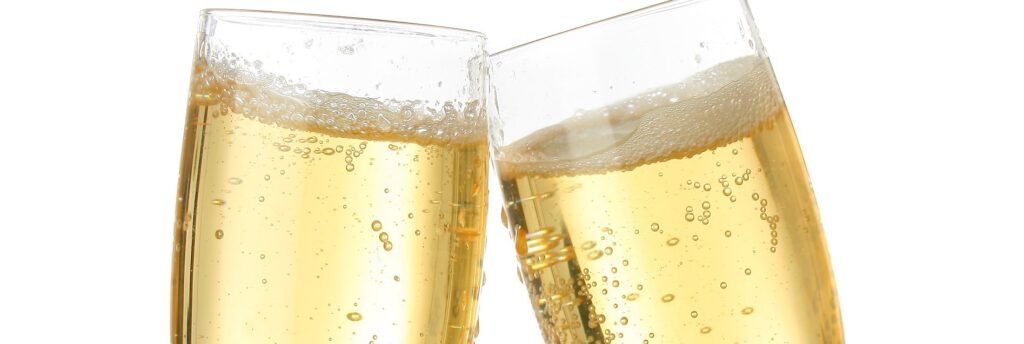
Have you ever wondered why champagne or sparkling wine actually bubbles? There are several methods for getting bubbles into wine, so there isn't just one single correct answer. However, the vast majority of modern sparkling wines (excluding the very cheapest ones) get their bubbles from a second fermentation of the base wine under pressure, either in the bottle or in a tank.
Local legislation and the specific regulations of quality regions vary in terms of aging times, minimum alcohol content, and other product characteristics. But generally speaking, a minimum pressure of 3.5 bar is the threshold that separates sparkling wine from lighter, gently fizzy or semi-sparkling wines (these often appear under the names pétillant or frizzante).
If you want to explore the different sparkling wine production methods in more detail, keep reading and learn about the most important techniques.
Champagne method or traditional method
Champagne, which originates from France, is undoubtedly the most famous quality sparkling wine. It can only be produced in the Champagne region and exclusively using the so-called champagne method (Méthode champenoise), also known as the traditional method. Even if a sparkling wine from elsewhere is made the same way, the label cannot refer to the champagne method. The EU protected designation of origin and the use of the name or method is therefore protected and permitted only for quality sparkling wines from the Champagne region of France. In other regions or countries, sparkling wines made using the same method can be described on the label with terms such as Méthode traditionnelle, Méthode classique, or Método classico.
The traditional method actually came about by accident in France, in the Champagne region sometime around the turn of the 17th and 18th centuries, when the region's sweet wine began to ferment again in bottles. The method is essentially still the same today. Nowadays, however, things don't happen by accident but in a controlled manner. First, the base wine undergoes a second fermentation in bottles with the addition of special yeast and sugar, which makes the base wine sparkle. Then the sparkling wine ages on the lees (sur lie). After aging, the sediment in the bottle is guided to the neck of the bottle by 'riddling'. Small producers and some larger houses' special prestige champagnes are still riddled by hand, meaning the bottles are systematically turned in 'pupitre' racks so that the sediment in the bottle settles into the neck. Larger producers generally use devices called 'gyropalettes' that do the same thing. Once the sediment has completely settled in the neck of the bottle, that part of the bottle is rapidly cooled to a low temperature. The frozen sediment plug is removed, the bottle is topped up, the sweetness level is adjusted (dosage), and the final cork is inserted.
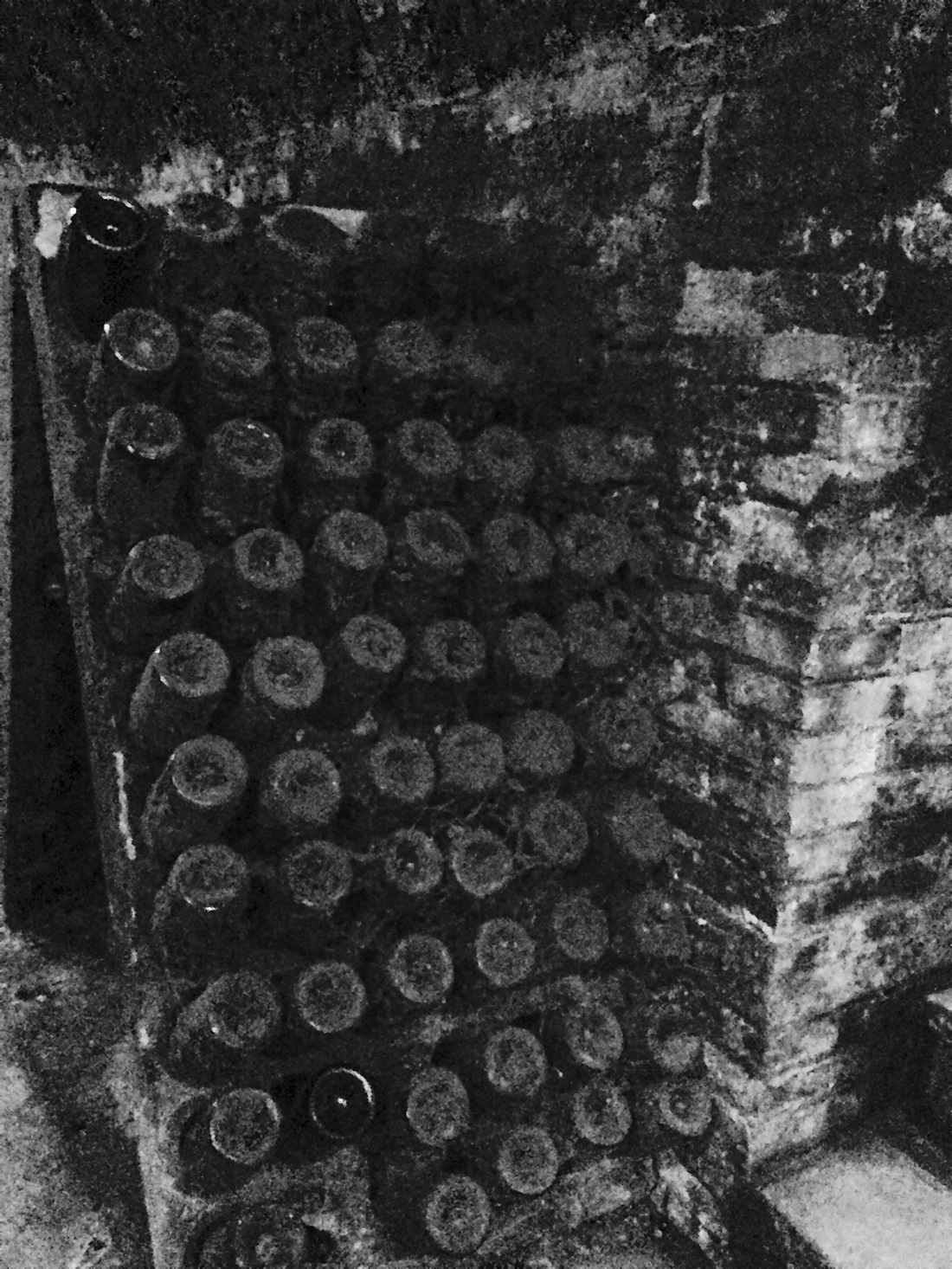
In the pupitre rack, the bottles are positioned downward so that the sediment flows into the neck of the bottle.
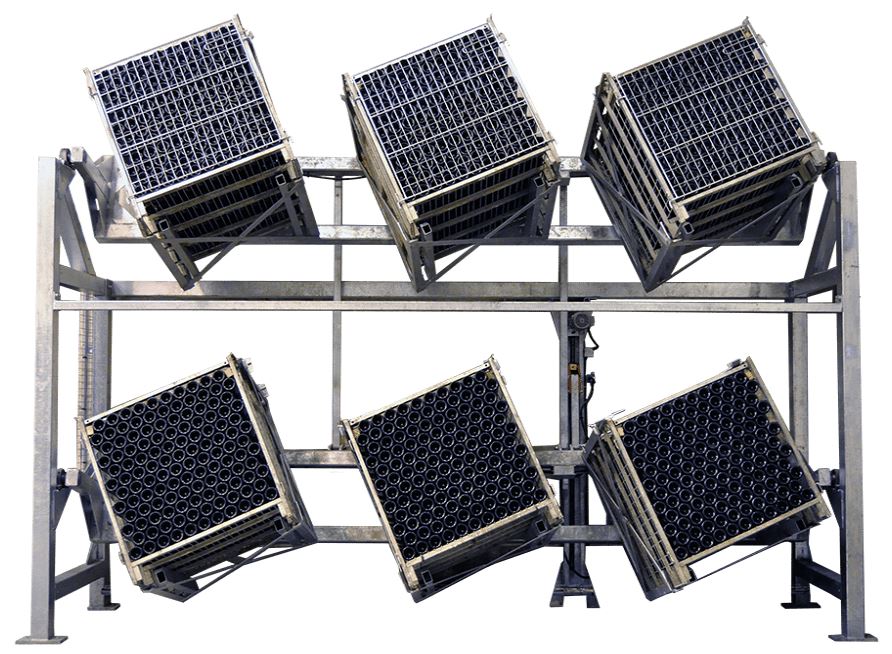
The gyropalette handles the turning of bottles automatically. Image: www.oenoconcept.com
The traditional method is a lengthy process, typically ranging from nine months to several years, depending on the country's and production region's legislation. In addition to champagne, there is only one other quality sparkling wine region in the world where the name of the drink itself and the local name of the traditional method are the same: Italy's Franciacorta. For this reason, a Franciacorta bottle does not display the words Méthode Traditionnelle, as 'Franciacorta' also confirms the method used.
This method is used to produce champagne and other high-quality sparkling wines such as Crémant, Cava, and Franciacorta. Check out the example products below:
If you want to host a wine tasting and compare traditional method sparkling wines made in different countries, you can download an A3-sized tasting sheet from Viikon Viini here.
Tank fermentation method
This method was developed by Mr. Eugene Charmat in Bordeaux, France, in the early 1900s (Méthode Charmat). It's also known as the tank method, cuve close, or autoclave. In this case, the second fermentation of the base wine takes place in large pressurized steel tanks. The sweetness level is adjusted during bottling. This method is usually shorter than the traditional method: typically, the sparkling wine is ready for sale in as little as three weeks. However, a quality blend of base wines and a longer, slower fermentation also make it possible to produce high-quality sparkling wines using the tank fermentation method.
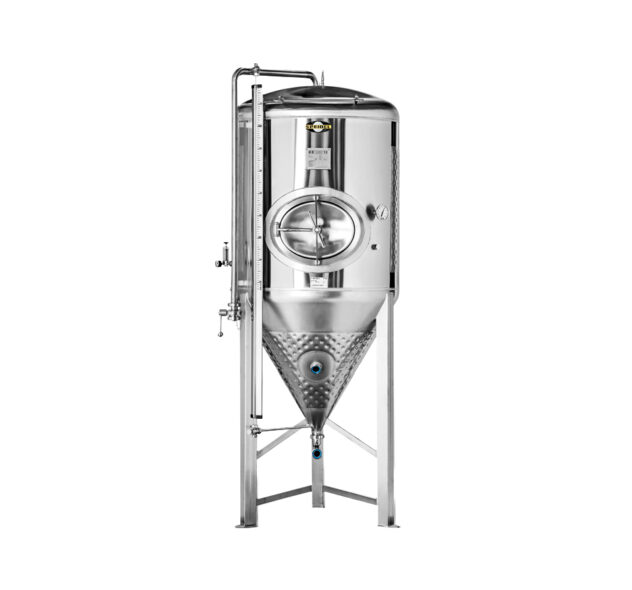
The base wine ferments again in a steel tank. Image: www.speidel-edelstahlbehaelter.de
This method is often used to produce lighter, fruity sparkling wines. A typical example is Prosecco wines, such as:
Single fermentation method
This is the oldest method of sparkling wine production. It's also called Méthode Ancestrale, with subtypes including the Rurale method and the Gaillacoise method. This 'ancient method' has remained strong throughout the ages in some countries and certain regions, such as southwestern France. Even in Finland, the micro-trending Pet-Nat wines ('Pétillant Naturel') are exactly these single-fermentation wines.
The wine ferments only once, and the final pressure in the bottle is lower than with modern techniques. As a result, wines produced using this method are often actually just semi-sparkling, or at least more lightly sparkling. The lower pressure allows bottles to be sealed with a crown cap. However, a sparkling wine cork is often chosen so that the product is associated with the right product category in the consumer's mind.
In these methods, the grape must only partially ferments into wine before it's sealed in the bottle. The remaining residual sugar and yeast continue fermenting in the closed space, and the carbon dioxide binds as bubbles in the wine. The amount of residual sugar in the wine determines the final sweetness level of the sparkling wine. (Compared to two-fermentation methods, where the sugar content in the final sparkling wine is adjusted separately.)
Impregnation, or essentially carbonation
In this method, there is no second fermentation. Carbon dioxide is simply added to the wine in a pressure tank. This is usually used to produce light, only the most affordable sparkling wines. With this 'soda technique,' the bubbles are quite separate from the wine, meaning the original wine tastes exactly as it was—the method doesn't add or enhance flavors. The bubbles are typically large and disappear soon after opening.
Other methods
The transfer method is a hybrid between the tank fermentation method and the traditional method. It's also known as the bottle fermentation method and transfer method. The sparkling wine fermentation takes place in the bottle with added sugar and yeast, and lees aging is possible. Riddling to remove the sediment is not done; instead, directly after lees aging, the bottles are emptied into a tank where the sediment is removed and then the sparkling wine is bottled. The final sweetness level is adjusted during bottling.
The transversage method is almost the same, but the difference is that the bottles have been riddled and the sediment removed from the bottles before the sparkling wine is transferred to a pressure tank, the sweetness level is adjusted, and the wine is bottled. This is typically how all bottle sizes other than 75 centiliters are made for traditional method sparkling wines, including champagne. Of course, exceptions here also prove the rule.
Here you can access the sparkling wines and champagnes selection in the product search.