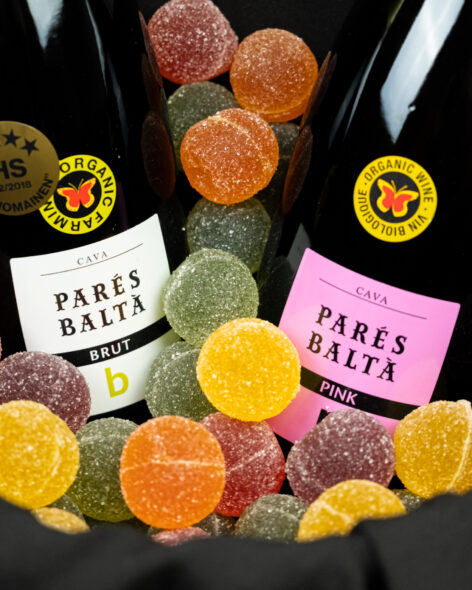
Parés Baltà Cava Brut b and Pink P
Parés Baltà winery was founded back in 1790 and remains a family business to...
Biodynamic wines are always organic, but the philosophy goes even further. Biodynamics comes from the words 'Bio' (= focus on life and ecosystems) and 'Dynamic' (= connection to the rhythmic movements of the universe; cycles, movement). The vineyard is seen as a self-sustaining whole, an integrated part of all creation. Biodynamic farming is based on Rudolf Steiner's anthroposophical views. On this page, we've gathered more information on the topic as well as products.
Learn more about the Biodynamic Association here.
Philosopher Rudolf Steiner was an Austrian thinker. He's well known in Finland especially for his educational philosophy, which is followed in Steiner schools. He created a worldview movement called anthroposophy. Interested in this, a group of farmers contacted Rudolf Steiner in 1924. They were concerned about how soil fertility was declining and food quality along with it; animals and plants were struggling. Steiner gave a lecture series on sustainable agriculture, which resulted in the foundation for modern organic farming and, further, biodynamic farming.
Biodynamic farming is based on sustainable use of natural resources. Biodynamic products are always organic, but much more than that. In biodynamic farming, whether grain or wine, the ideal and principle are the same: the farm is as independent and self-regulating a unit as possible. This means everything is in balance: there are both animals and plants, and for example, no more animals are kept than the farm can feed. Plants are grown diversely, everything works naturally. The farm's components are interdependent and live in symbiosis. Humans work together with plants, soil, and animals. Chemical fertilizers, pesticides, or additives are not used. But compared to organic farming, for example, there's a broader understanding of agriculture. Steiner told farmers that agriculture is connected to the entire cosmos. The tidal phenomenon has been used as an example, but the matter is much broader. Production must take into account cosmic rhythms (e.g., lunar cycles), soil as an active agent ('the plant's digestive system'), and the soul forces of animals. Steiner introduced biodynamic preparations in which these elements combine.
Biodynamic farmers see plants as consisting of four 'organs': root, leaf/shoot, flower, and fruit. These are linked in thinking to four basic elements respectively: earth, water, air, and fire (the sun's warmth). Each plant part benefits at specific times when the moon's orbit passes one of the twelve constellations. As an example: spraying cow horn manure on the soil to promote root growth is most effective when the moon is in front of an earth/root constellation, such as Taurus, Virgo, or Capricorn. Such a window occurs about every nine days but lasts only two to three days at a time. Only very few small producers can time all their farming activities perfectly according to this biodynamic calendar. For wines, cellar work is also said to benefit from this calendar. For example, bottling is said to be best done during the Leo constellation if the wine is meant to withstand aging (when fruit and fire elements are at their strongest). Some producers have also confirmed that wines taste different each day, depending on whether root, leaf/shoot, flower, or fruit days are occurring in the biodynamic calendar. It's worth remembering that when we talk about constellations, we're talking about them in an astronomical sense, not astrological, so horoscope predictions are completely different from biodynamics.
Preparations are a distinctive feature of biodynamic farming. The ingredients used are always from nature, exposed to the forces of nature. After this, they return to nourish the soil in a transformed form. Like medicines to treat the soil. There are two types: compost preparations and spray preparations. Preparations use ingredients such as nettle, cow manure, oak bark, yarrow, and chamomile.
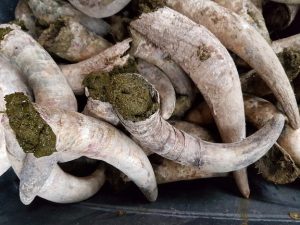
Preparations are often buried in the ground, for example in an animal horn, which is often associated with the biodynamic world in illustrations. They're buried to mature for at least six months in summer or winter. Then they're added to compost, directly to the ground, or made into sprays. Small amounts are needed. For example, horn manure preparation is sprayed on the soil in the afternoons, in autumn and early spring, to stimulate certain microbiological processes in the soil. This maintains the amount of organic material in the soil and keeps its structure good. Preparations must be 'dynamized,' meaning mixed with water in a specific way.
The group of farmers who sought Steiner's advice left confused but confident to implement his vision in practice. They founded a group that later began naming their products after Demeter (the Greek mythology's god of fertility).
Demeter is the only body for biodynamic certification where standards are consistent for farmers in Italy as well as Argentina, for example. Biodyvin, operating from France, also certifies biodynamic wines in some countries of origin, but their criteria don't go into as much detail as Demeter's.
Products that have received certification can be recognized by the Demeter mark. Producers are under strict supervision. It's also possible that a wine producer operates biodynamically and has only certified their vineyard, but not the products themselves. In that case, the Demeter logo won't appear on the final products. Demeter defines animals as a mandatory part of the farm entity. They have many useful roles: cows fertilize, horses and mules replace tractors, sheep eat excess vegetation and weeds, chickens or ducks eat unwanted larvae and snails → balance → the farm is a self-regulating unit.
Wine is also an agricultural product. Pests and diseases are also getting more and more wine growers interested in the biodynamic production method, so the supply of these wines is gradually growing. Demeter's international production conditions define the matter beautifully:
"Demeter/Biodynamic wine helps the development of nature and humanity by speaking to the senses and the mind. Demeter/Biodynamic viticulture is not a means to an end, but rather its purpose is to enrich the world and celebrate the beauty and life of nature."
The wine world has always talked about 'terroir' thinking. This idea works the same way in biodynamic viticulture; all elements (including soil, grapevine, climate, animals and plants around) are ultimately one whole in interaction with each other. In a biodynamic producer's wines, you can really taste that particular farm's unique flavor.
According to the international Demeter association's data (2022), there were 1,287 Demeter-certified wine estates in the world. These covered over 22,000 hectares of biodynamic vineyards. Most biodynamic wine estates were in France, Italy second, and Germany third. Biodynamic vineyard hectares, on the other hand, were most numerous in France, second most in Spain, and Italy third.
Special features of biodynamic winemaking, from grapes to finished wine:
Did you know?
3 things that distinguish biodynamic and organic viticulture from each other:
1. The vineyard must become a 'self-regulating unit' ('farm organism')
2. Vineyards must be treated regularly with certain herb- and mineral-based biodynamic 'preparations'.
3. Key tasks such as planting, pruning vines, plowing the soil, harvesting grapes, and bottling must be timed to harness beneficial natural developmental forces. These arise from rhythms determined by terrestrial and astronomical cycles (especially the sun and moon).
Here you can access the product search section where you'll find biodynamic wines. Also learn about the Biodynamic Association's activities here.
Biodynamic thinking can also be applied in your own home garden when growing houseplants, flowers, or vegetables, for example. The focus is on observing plants and following their species-typical growth and development.
The garden is seen as a constantly changing and living system that is its own entity. From a biodynamic perspective, home growing is centered on making observations of plant growth processes, experimenting, and learning new things.
Biodynamic cultivation is always done according to organic principles, meaning pesticides are not used, for example. Organic and biodynamic seeds as well as biodynamic preparations are also available, which can be used to support different growth stages and improve fertilizers. If desired, you can also use a calendar and moon phases to help choose the timing of planting.
Parés Baltà winery was founded back in 1790 and remains a family business to...
Cantina Orsogna was founded in 1964 by a small group of winegrowers in Italy’s...
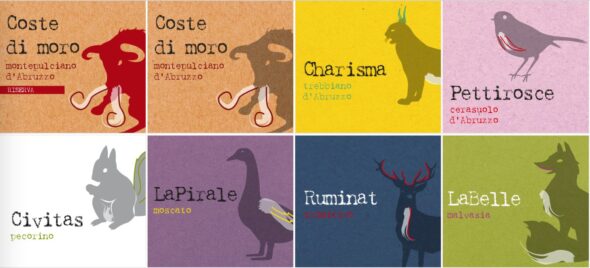
Lunaria wines are biodynamic, organic, and suitable for vegans. The wine grapes are grown...