Do you know what decanting is? Decanting sounds more complicated than it is, because at its simplest, decanting refers to pouring wine from the bottle into a carafe. Why do this, and should it be done for all wines?
Oxygen opens up the wine's aromas
Decanting is sometimes referred to as aerating wine, a process where the wine is allowed to breathe and get oxygen. The purpose of aeration is to let the wine come into contact with oxygen, which opens up its aromas and brings out the wine's complex flavors and scents.
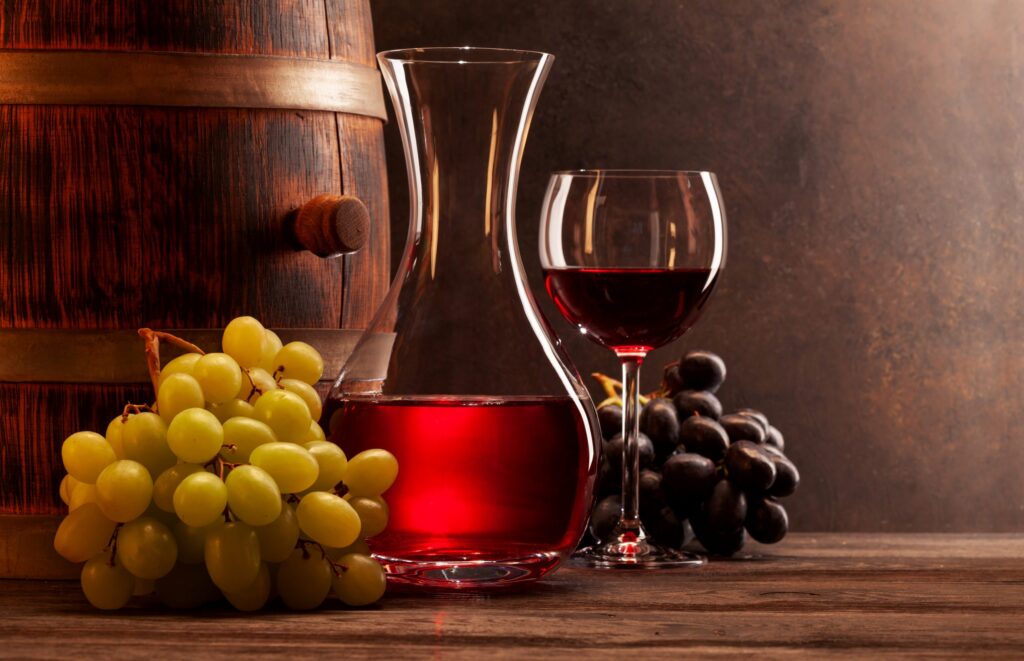
Aerating wine can be as simple as opening the cork and letting the bottle sit on the table well before serving, for example half an hour in advance. You can enhance aeration by pouring out one glass from the bottle, allowing more oxygen into the partially emptied bottle. The wine gets most effectively aerated when you pour it from the bottle into a carafe.

Does decanting mean the same thing as aerating wine? Not exactly, although aeration does happen when wine is decanted. Actual decanting refers to the process where any sediment that has accumulated in the wine is separated before drinking.
The purpose of decanting is to ensure that any sediment that may have settled at the bottom of the wine bottle doesn't end up in your glass. In decanting, the wine is poured from the bottle into a carafe or decanter, which also effectively aerates the wine.
Actual decanting isn't always necessary
Not all wines have sediment and don't need to be decanted—aeration is enough. Wines that need actual decanting are usually older and mature red wines, port wines, or white wines, and sediment accumulation is a normal result of wine aging. Some old and valuable champagnes may also be decanted, but with sparkling wines you should be careful during decanting so that their bubbles don't suffer.
Sediment also appears in some younger wines like natural wines, which are minimally processed and unfiltered.
There are many exceptions between wines and producers regarding the need for decanting and the exact method, so it's worth asking the helpful staff at Alko for more information.

How to do it
Decanting is done by slowly pouring the wine into a carafe or decanter, which is a glass vessel designed for this purpose that resembles a carafe. Before decanting, the wine bottle should stand upright for a good while so that all sediment has settled to the bottom and decanting works as well as possible.
During decanting, constantly watch the sediment moving from the bottom of the wine bottle toward the neck, and stop pouring when the first sediment particles reach the neck. When decanting, good lighting is extremely important so that the sediment movement can be seen clearly through the bottle, especially in dark wine. Recommended lighting for decanting is, for example, bright candlelight.
Even wines without sediment usually benefit from getting oxygen, so it's worth aerating them too by pouring the wine into a carafe or simply letting the bottle sit open for a moment before serving. When it comes into contact with oxygen, the wine opens up beautifully and is especially fresh and smooth.