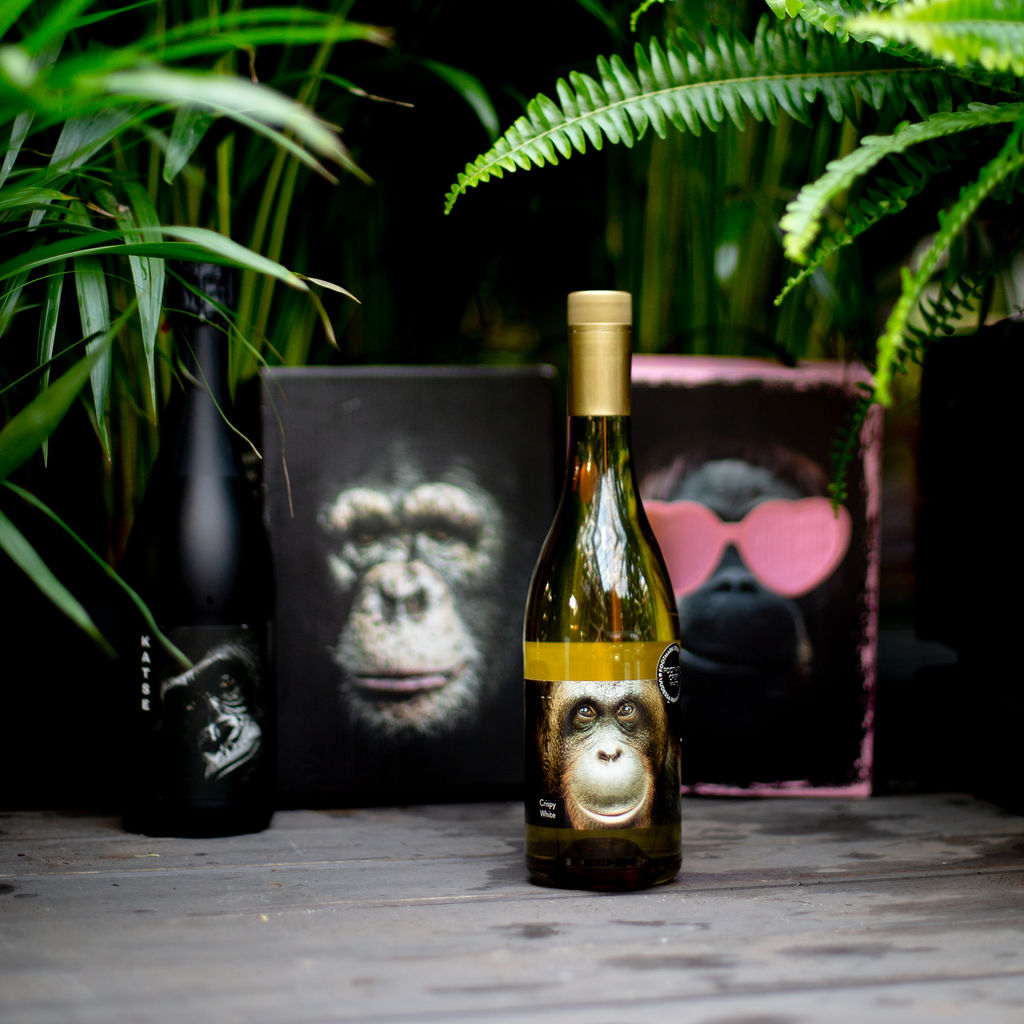
Apes, those distant relatives of ours, have charmed us on KATSE series wine bottles and packaging since 2019. We've gathered here all sorts of interesting facts about these magnificent animals.
JAPANESE MACAQUE (Macaca fuscata)
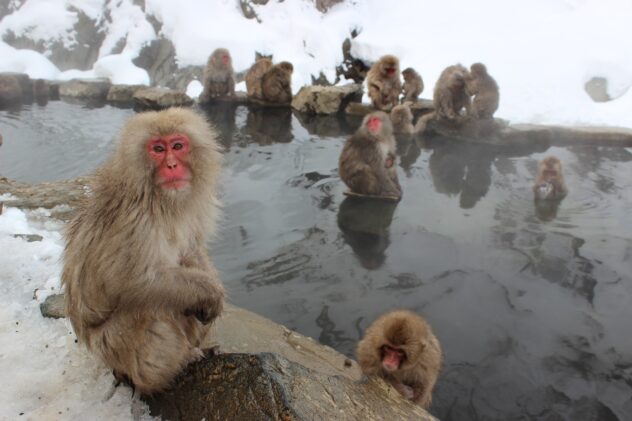
The Japanese macaque, often referred to as the snow monkey, thrives on three of Japan's four main islands. They're also found in quite cold regions, where volcanic hot springs serve as wonderfully warming bathing spots. The bathing tradition is learned behavior and is passed down from generation to generation. Similarly, the skill and desire to make snowballs just for fun is known to be passed on to offspring.
The Japanese macaque is a medium-sized, diurnal monkey, with males being twice as large as females. A full-grown male weighs an average of 11.3 kilograms. Their faces are hairless and very human-like and expressive. They can also walk on two legs if both hands happen to be carrying something. Japanese macaques typically live to be 22-27 years old. The species thrives both in trees and on the ground. The highly social Japanese macaque typically lives in troops of 20-30 individuals, with a very strict social hierarchy. The troop is led by an alpha female and male. Males of the species also participate in caring for offspring. They're quite omnivorous in terms of diet, with the menu varying according to seasons and availability. The menu includes fruits, seeds, leaves, flowers, mushrooms, bird eggs, insects, snails, crabs, and even tree bark.
ORANGUTAN (Pongo)
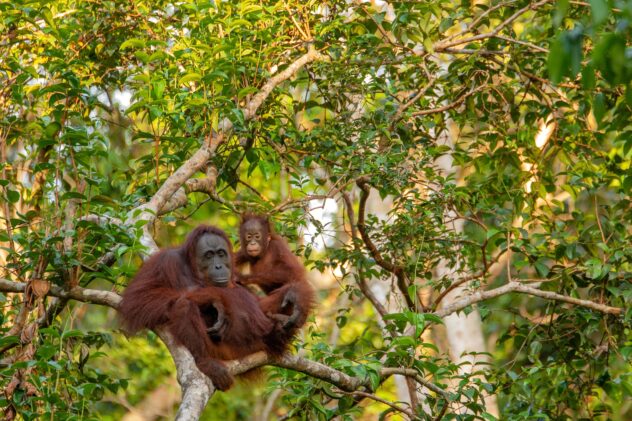
The critically endangered orangutan persists as three subspecies in Southeast Asia (Bornean, Sumatran, and Tapanuli orangutans). It usually lives alone and spends most of its life in trees. Evening routines include building a new sleeping nest high in the treetops, where large predators can't reach. It's the largest tree-dwelling primate; an adult orangutan can grow to one and a half meters and weigh ninety kilograms. The average lifespan is 40 years. Human and orangutan DNA is 96.4% identical. Their diet includes fruits, fresh leaves and shoots, tree bark, insects, and sometimes bird eggs.
CHIMPANZEE (Pan troglodytes)
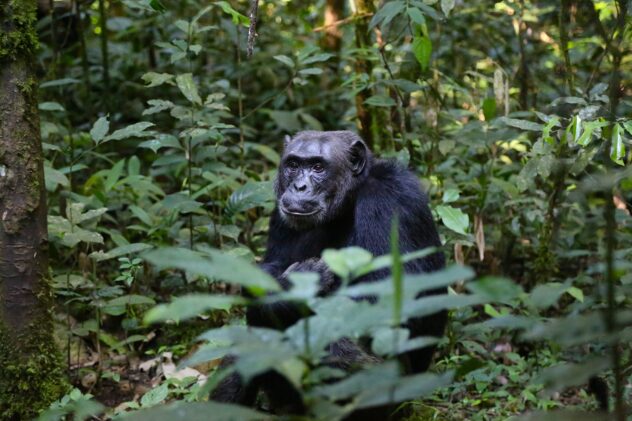
The endangered chimpanzee lives in Central Africa. The social chimpanzee is biologically closer to humans than to gorillas, with 95-98% of our genes being the same. They laugh when playing and behave in many ways like humans: they kiss, hug, pat each other on the back, and tickle one another. Males are larger than females, with adult weight ranging from 30-60 kilograms and height from 130-160 centimeters. Spending most of their time in trees, chimpanzees usually move on the ground on all fours, though they can also cover distance on two legs like humans. The omnivorous chimpanzee enjoys fresh leaves, seeds, fruits, and insects like many other apes, but when necessary hunts even small mammals. Chimpanzees are also skilled at using tools to reach food or drinking water, for example using a stick to catch termites from their nest.
GORILLA (Gorilla)
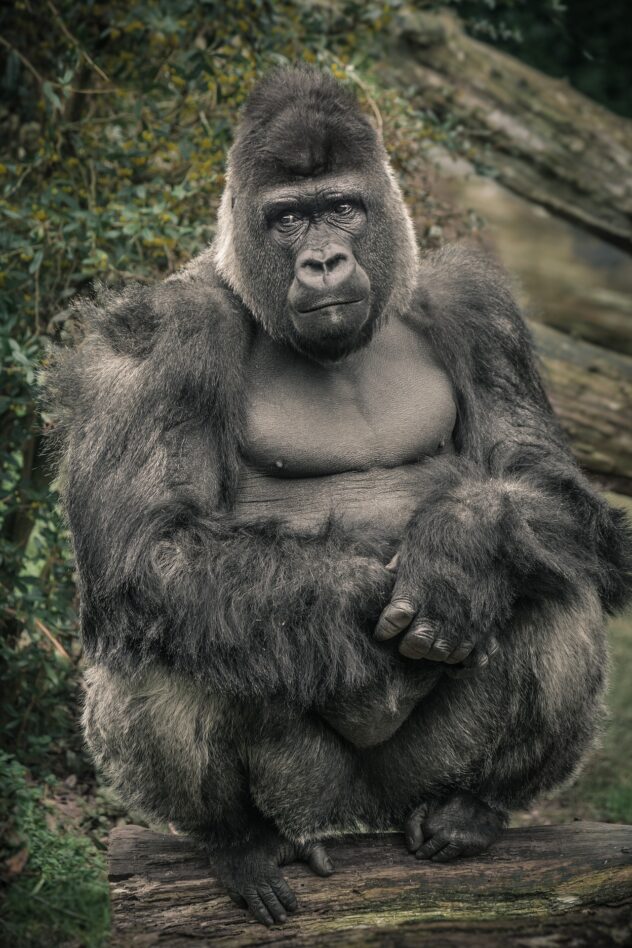
The critically endangered gorilla lives in the forests and mountains of central and western Africa. The gorilla is the largest and strongest ground-dwelling primate. Males (up to two hundred kilograms) are larger than females, and adults are 150-180 cm tall. As they mature, males develop a silvery coat of fur on their backs. Two subspecies: Eastern gorilla or Gorilla beringei and Western Gorilla or Gorilla gorilla. A diurnal animal, the gorilla moves primarily on its knuckles on the ground, but can also climb trees or walk short distances on two legs. They live socially in family groups/troops averaging 10 individuals, led by a dominant male.
Gorillas eat fruits, leaves, shoots, and tree bark, as well as insects. Gorillas also build single-use sleeping nests, usually on the ground but sometimes in trees. Gorillas can certainly live to be over 40 years old, though dangers in the wild and unfortunate poaching lower life expectancy. Consider that we share up to 98.3% of our genes with gorillas—they're quite close relatives. No wonder gorillas also fall ill and die from the same diseases as humans.
ENDANGERED APES NEED HELP
Humans are the greatest threat to many other species. This is also true for several ape species. For gorillas, extremely tragic poaching is prominent, but for them and several other species, the major threat is the destruction of natural habitats as a result of human activity.
IUCN maintains the Red List of Threatened Species, where you can check the status of species that interest you and find lots of information.
If you'd like to become a donor, there are many organizations that support the preservation of numerous species and habitats around the world. Here are a few examples for gorillas, orangutans, and chimpanzees:
Dian Fossey Gorilla Fund: https://gorillafund.org/
WWF Finland Rainforest Sponsor: https://wwf.fi/lahjoita/liity-kummiksi/sademetsa-kummi/
Jane Goodall Institute: https://janegoodall.org/make-a-difference/
On the WWF Finland website, you'll also find our domestic species that likewise need help to survive.
Sources:
https://www.neprimateconservancy.org/japanese-macaque.html
https://www.worldwildlife.org/species/chimpanzee
https://www.janegoodall.org.uk
https://janegoodall.ca/our-stories/10-things-chimpanzees-eat/
https://www.tunturisusi.com/simpanssi/
TIPS WILL BE ADDED TO THIS PAGE ON HOW TO USE KATSE SERIES WINES; FOR EXAMPLE, WINE COCKTAIL RECIPES AND PAIRING SUGGESTIONS WITH SUITABLE FOODS.