It's said that old vines make better wine, and often that's true. Defining an old vine in years is difficult and relative, as there's great variation depending on the grape variety and growing region. While one grape variety's vine may be approaching the end of its life at 35 years in its own growing area, at the same time, for example, in Spain's Toro region, old vines produce magnificent wines from the Tinta de Toro (Tempranillo) variety even at a hundred years old. The soil in the Toro region contains a lot of sand, where the Phylloxera insect—which destroys grapevines down to their roots—cannot survive. So this pest, which caused widespread devastation in European vineyards in the late 1800s, never established itself in Toro, and the region still has very old vines.
Explore Matsu wines in more detail on the producer's own website.
The Fascinating Life of a Grapevine
In principle (generalizing regardless of country and region of origin), it can be said that on average, a new grapevine takes three years before it begins to produce a full harvest. Around the fifth or sixth year, it already yields good wine, though the third or fourth year's harvest may be used as part of blends. From about the fifth year onward, the grapevine's vitality grows, and it continues to grow, which is of course controlled by pruning and directing the vine's growth.
Vitality and growth reach their peak roughly after 20-30 years, after which the grapevine's vitality declines. After fifty years, the vine is clearly elderly. This depends heavily on the grape variety and growing region, so there's great variation. At that stage, people often start talking about old vines. An old vine produces fewer grapes (versus a young vine that's bursting with them).
When there are fewer grapes, their flavor becomes more concentrated, intense, and nuanced. An old vine's roots have grown deep, from which the vine gets water at an appropriately slow rate and diverse nutrients from many soil layers. Even in a dry year, the vine doesn't suffer, because it finds enough water deep in the soil.
MATSU is Japanese and means 'to wait'. It refers to how winemaking requires patience in order to achieve excellent results.
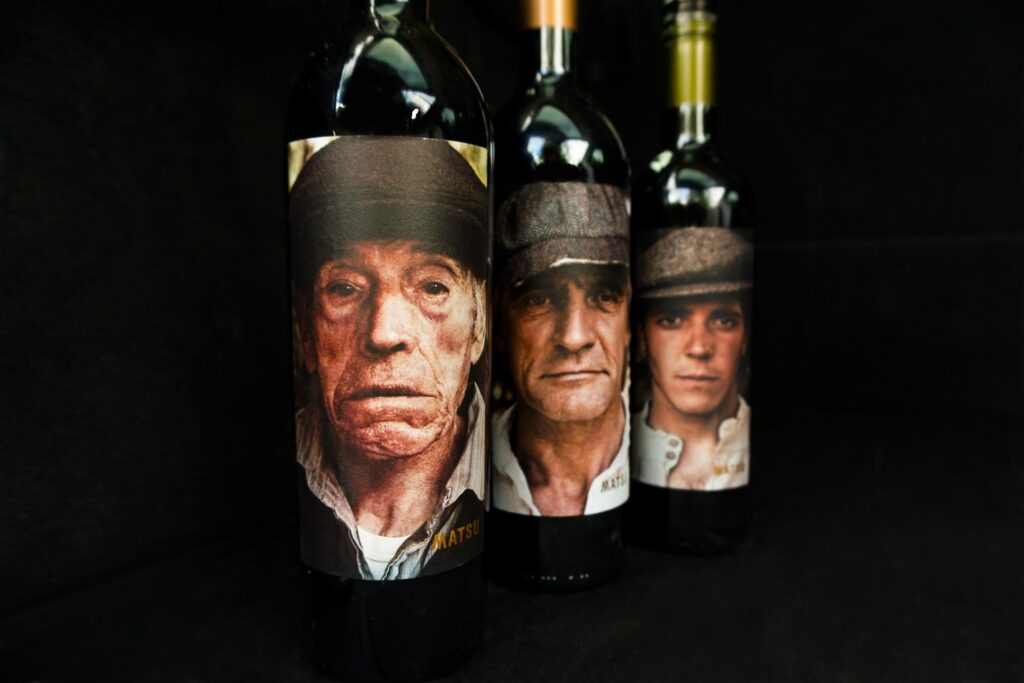
MATSU is a series of wines where the age of the man on the label symbolizes the wine's character, the length of aging, and the age of the vines.
MATSU wines grow in Spain's Toro appellation. They're made from the Tinta de Toro variety, also called Tempranillo. Old vines, even over a hundred years old, grow in rocky soil. The vineyards are managed according to biodynamic principles as naturally as possible, even though the wines don't have biodynamic certification.
Organize Your Own Matsu Wine Tasting
The best way to get to know the secrets of wines is by tasting them. We've prepared a tasting template for Matsu wines that makes wine tasting easy and fun. Try it with friends, together or remotely!
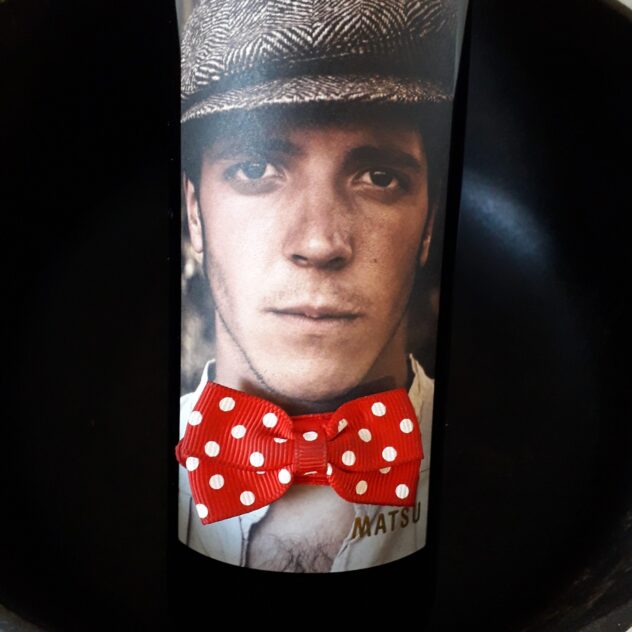
Matsu El Picaro or "The Rascal"
is shameless, youthful, bold, powerful. The Tinta de Toro grapes for this wine come from vines about 90 years old. Still, El Picaro is the youngster of the series. The wine ferments in a controlled manner in cement tanks, below 24 degrees. This brings as much fruitiness and freshness to the wine as possible. This is followed by malolactic fermentation in French oak barrels. The product is not filtered, so the natural aromas are best preserved. El Picaro is vegan and packaged in environmentally responsible packaging.
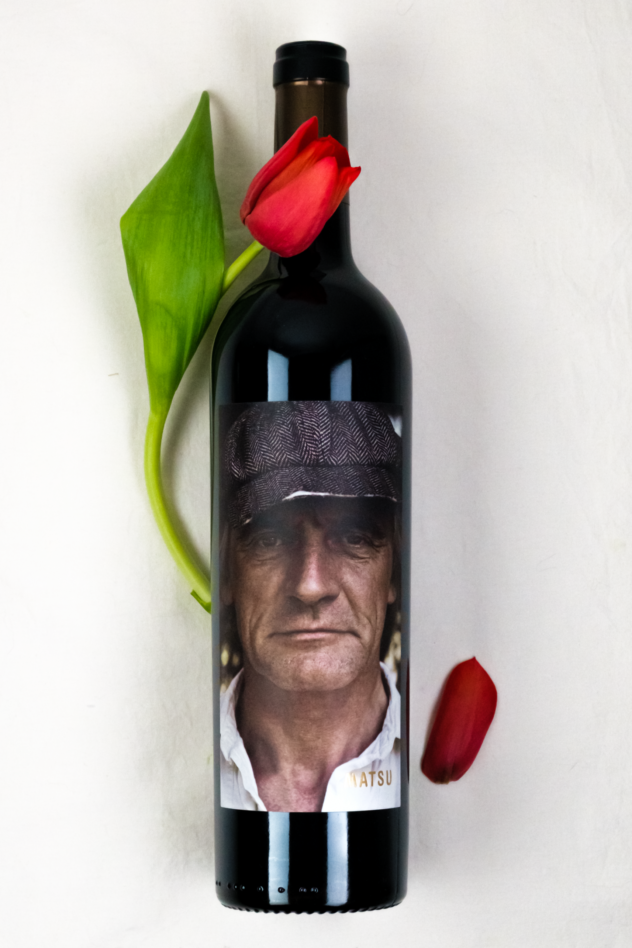
Matsu El Recio or "The Tough Guy"
is sturdy, confident, reliable, hard-nosed—a mature and experienced "Tough Guy". The Tinta de Toro grapes for El Recio come from 90-100 year old vineyards. Age brings to wine, as to people, more dimensions and depth. The wine has macerated and fermented in cement tanks to ensure fruitiness and freshness. Malolactic fermentation takes place in French oak barrels. El Recio has also aged for 14 months in new French oak barrels. The wine is not filtered, so its aromatic character is guaranteed. El Recio is suitable for vegans.
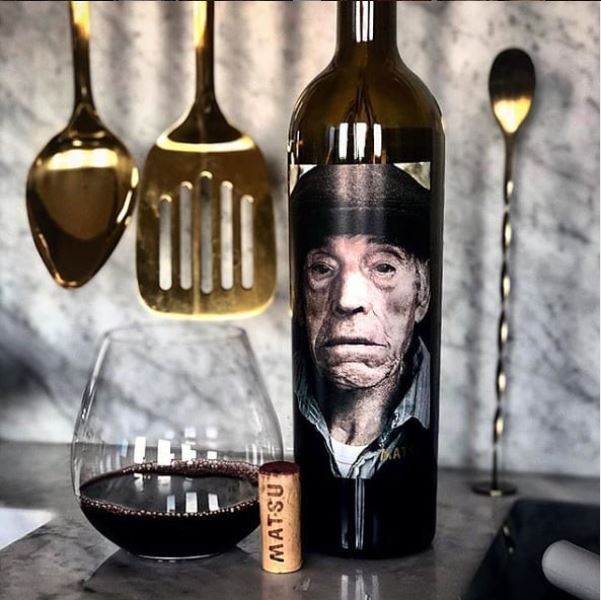
Matsu El Viejo or "The Old Man"
is genuine, dignified, wise, stubborn. El Viejo is produced from the Tinta de Toro variety, which is the local name for Tempranillo. The vines are over 100 years old. Like an elderly person, El Viejo is like a book full of interesting stories and nuanced layers. The wine has macerated for 3 weeks and fermented in cement tanks. Malolactic fermentation takes place in French oak barrels. El Viejo ages for at least 16 months in new French oak barrels. The wine is unfiltered, so the flavors are at their richest. El Viejo is suitable for vegans.