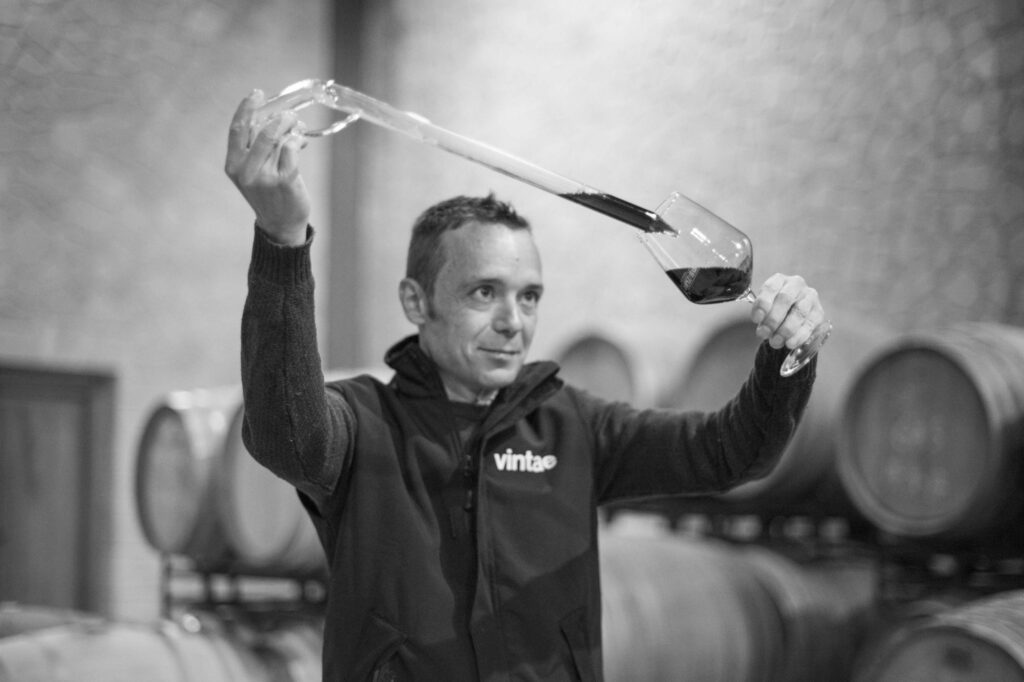
Hacienda López de Haro's wines are a joy to taste. Careful and skillful cellar work transforms grapes from ancient vines into modern classics, a new generation of Rioja.
Rioja has plenty of good wine, delicacies, and atmosphere
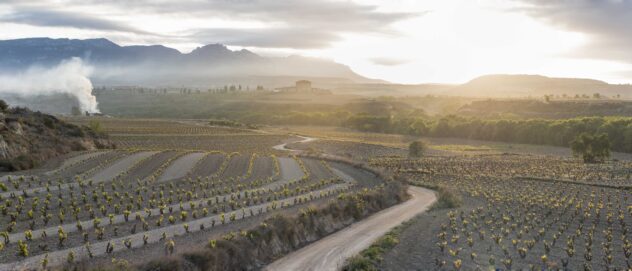
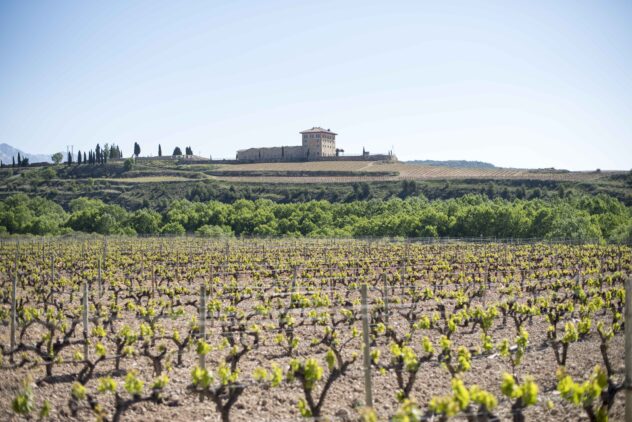
The landscape of the village of San Vicente de la Sonsierra is dominated by an impressive castle perched on a hilltop. The sturdy stone structure has watched over the landscape for a long time, as it was built in the 10th century as a fortress for the people of Navarre, which together with the castle of Davalillo formed a defensive line. Nowadays, the castle is only stormed by tourists led by guides. Some are equipped with an iPhone app that lets you explore the landscape, its development over the centuries, and listen to or read about the castle's history and the surrounding view. San Vicente de la Sonsierra is relatively small, a community of just over 1,200 residents. Glance from the high castle walls in any direction, and your gaze inevitably catches vineyards in large patches across the landscape. San Vicente de la Sonsierra is in the heart of Rioja Alta, the vines look out over the Ebro River, and the Toloño mountain range provides shelter from cold winds. The area has its own microclimate, with enough wind and moderate temperatures, with rainfall concentrated in the winter months.
Remembering the old days
To a wine lover's eye, the landscape is breathtakingly beautiful. As I drive up the hillside road, warm feelings ripple through my mind. Rioja red wines have been an introduction to the world of quality red wines for many Finns. Or to the world of red wines in general, as Rioja Tinto, bottled by Alko, was one of Alko's most popular products in the 1970s due to its affordable price. A better alternative was Estelar, similarly imported in tanks and bottled by Alko. Those were not the good old days. The entire 1970s was like a wilderness trek for wine enthusiasts, as there wasn't a single wine in Alko's entire price list that could be recommended with a warm heart. Fortunately, the horrors eventually ended, and as a herald of the new era, a quality Gran Reserva from Rioja appeared on Alko's list. Spain had banned the export of Rioja wines in anything other than bottles, and it was a wise decision. Quality inevitably rose. Inspired by these wines, I traveled around the Rioja region in the 1980s, exploring bodegas and local gastronomy. Now, decades later, moving through these landscapes felt like coming home. My appreciation and passion for the region's delicacies hasn't disappeared—quite the opposite.
History
The area has been inhabited for a long time. On the slopes of the Sierra de Cantabria, between San Vicente de la Sonsierra and Elvillar, are seven burial chambers made over 4,000 years ago. Roman conquerors brought wine with them before the beginning of the Common Era, and in their wake, you can still find basins carved into rock where wine was made. After the Romans, monasteries played a significant role in wine production, and in the early 13th century, a Riojan monk named Gonzalo de Berceo, who loved wine, wrote a four-line poem ending with the words "un vaso de bon vino"—a glass of good wine. For a very long time, almost exclusively vintage wine was made, which was poured out to make way for the new wine if any remained. When phylloxera struck France in the late 19th century, threatening the entire wine industry, a group of Bordeaux wine professionals moved to Rioja, and with them, barrel aging gradually became established.
Hacienda's gates
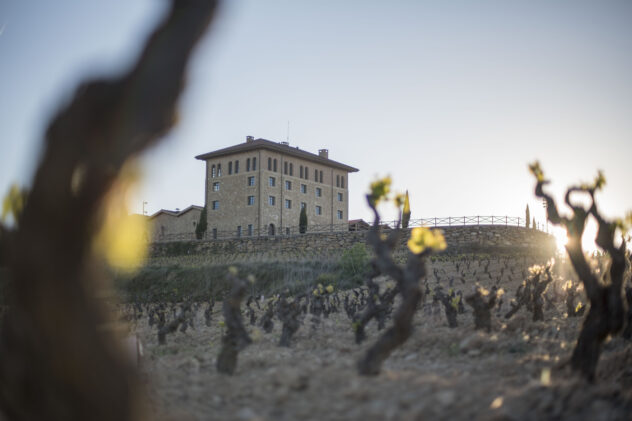
Hacienda López de Haro's building is castle-like, made of massive stone. As I search for the entrance, the building's enormous size becomes concrete. Once inside, I notice drawings on the first hallway depicting Roman winemaking and the refinement of the craft to today's level. I'm not the only one remembering the old days. I immediately understand the connection: Vintae, which owns López de Haro, is, in its own words, radical, and a true radical must know the past precisely to know what to change and why, and what to preserve and why. "We are restless, creative, and rebellious. We are dissenters who want to revolutionize the wine world without losing our essence. We bottle stories and tell them as we go," says Vintae's CEO Ricardo Arambarri.
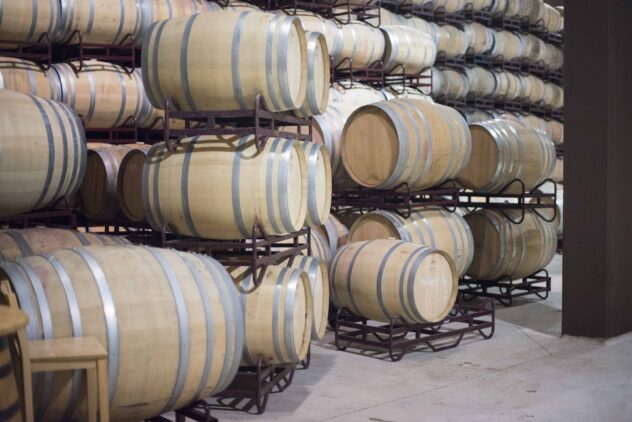
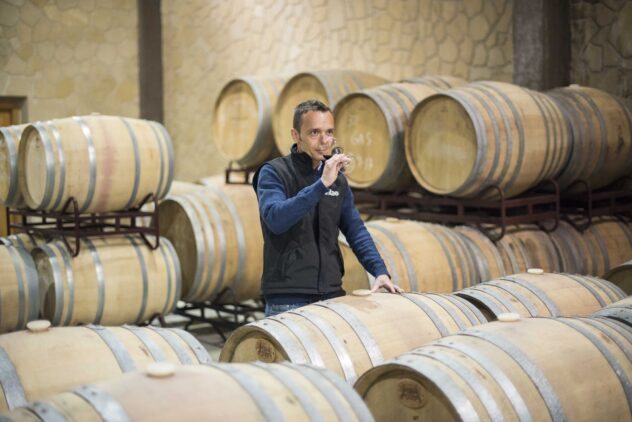
The cellar is impressive. Long rows of barrels, one after another, side by side, and stacked. A staggering amount of French oak. Refrigerated tanks. Everything has its place. Clean. And the cellar is also beautiful, classic. We wander around, drawing samples from barrels with a pipette, sips from taps on the sides of tanks. I've seen so many wine cellars, but I never tire of this. All my questions get answers, every detail has been thought through. Good wine doesn't happen by accident.
Ancient vines
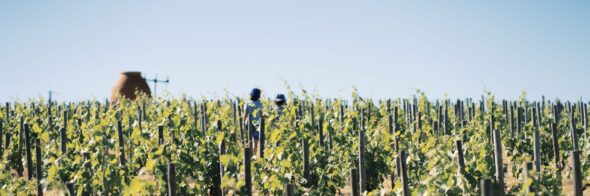
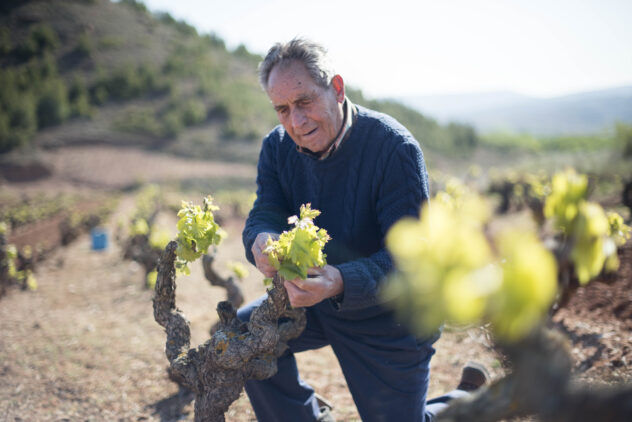
In this gentle climate, old vines rise from the gravel like short pillars with bark-like surfaces. Together with shoots and leaves, they form a goblet-like shape, which gives the training method its name: goblet or en vaso. The spaces between them are wide, and the gentle wind prevents moisture from doing damage—moldy grapes are not wanted here. Most of the vines are old, some even a hundred years old. An old vine growing in sparse soil doesn't produce many grapes, but their quality is high. The wines become multidimensional and nuanced. Here grow Rioja Alta's finest old vines. There's plenty of light, but a summer day doesn't tell the whole truth: in winter, a good layer of snow covers the vines and protects them from frost. On the slopes, nights are cool and ensure the grapes have sufficient acidity. Vineyards always need the human hand; an untended vine spreads like an explosion in all directions quickly. Pruning, tying, and trimming all require skill.
Hacienda López de Haro gets its grapes from trusted growers with whom they have long-term partnerships. Isaac Balda loves Tempranillo but also experiments with other varieties. Experience and wisdom don't come from just repeating the same thing. José Luis Pérez simply pampers his vines so that magic can then be made in the cellar. But he is a magician himself. José Antonio Lezana reckons it would be difficult not to make great wine from these grapes, but he does cultivate exceptionally fine vineyards organically. Iñaki Fernandez says he works his vineyard the way his father did, and his brother Dani Fernandez notes that the vineyard is grateful when treated well.
New-style Rioja
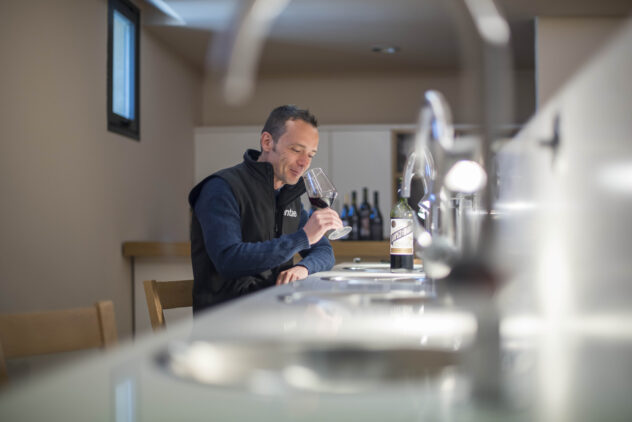
Hacienda López de Haro's wines are a joy to taste. I marvel, glass after glass, at how delicious the samples are, each more convincing than the last. Wineiness, clean lines, structure, multidimensionality, and length are found in every López de Haro bottle. They represent the long traditions of Rioja in a beautiful way, but without dragging steps, without oxidation or maderization. Careful and skillful cellar work transforms grapes from ancient vines into modern classics, a new generation of Rioja. Moreover, these wines are very reasonably priced for their quality.
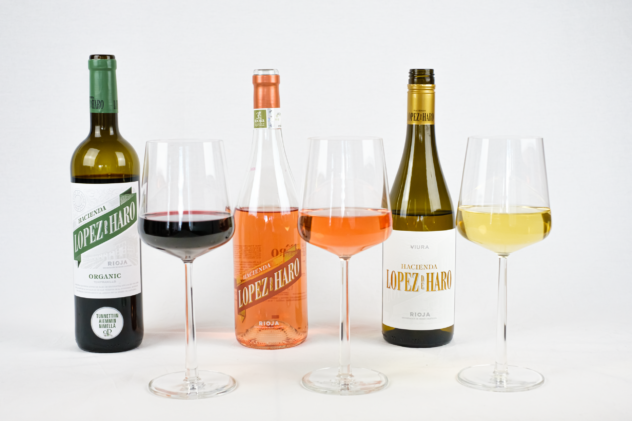
Hacienda López de Haro Rosé 2020 is a fresh and balanced rosé. Its Garnacha and Viura grapes were hand-picked throughout October from the slopes of the village of San Vicente de la Sonsierra. This ensured perfect ripeness of the grapes, although it naturally meant making the wine in several batches. The condition of the grapes was ensured by using small 15 kg boxes, which were rushed to the bodega immediately after picking. The grapes were macerated for 24–48 hours at a very cool temperature, which is enough to extract the beautiful pale pink color. The pressed juice fermented at the same 10°C temperature very slowly for 20 days, which preserves the juicy fruitiness.
López de Haro Rosé's aroma features red berries, pomegranates, red apples, fresh tobacco, and distant lavender. The taste is dry, crisply acidic, berry-like, currant-like, and grapefruit-like. This is a fleshy, balanced, long, and enjoyable rosé.
López de Haro Rosé is a delicious wine for the dinner table. For tapas, pies, salads, white meat, fish, smoked fish, cold cuts, and mild cheeses. And it tastes great while cooking too.
Hacienda López de Haro Organic Tempranillo 2016 is the same wine as the Finnish favorite QP. Now it's in new clothes, emphasizing the López de Haro wine line, whose home is San Vicente de la Sonsierra. The wine's diversity comes from grapes from four plots on a 20-hectare area in the classic Rioja Alta wine region. The plots are close together, but each has different soil, different slope, and different age. All the vines are old or very old. López de Haro Tempranillo is a modern, organically grown Rioja wine.
López de Haro Tempranillo's aroma reveals dark plums, boysenberries, blueberries, black cherries, leather, mocha, and spices. Its taste is juicily fruity, almost chewy, softly tannic, dark berry-like, leathery, and toasty. The long finish brings out coffee and dark chocolate.
López de Haro Tempranillo is a versatile meat wine and also pairs well with aged, hard cheeses.
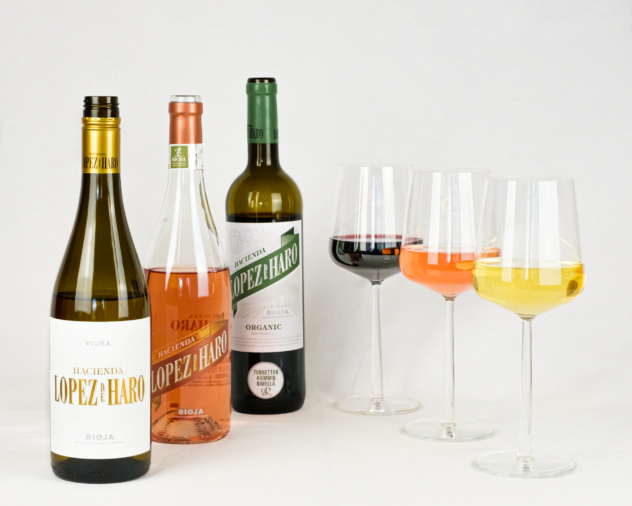
Hacienda López de Haro Blanco 2018 is a multidimensional, vibrantly acidic, and full-bodied white wine. The wine's grapes are hand-harvested Viura from old vines in October. Part of the wine was aged in French and Eastern European oak barrels. If you imagine a wine made from Viura grapes to be tired and oxidized, you can now update your perception. The blend includes other varieties (Malvasía, Chardonnay, Tempranillo Blanco, Sauvignon Blanc, and Garnacha Blanca) that add diversity, challenging the taster again and again and delighting the drinker. This wine is both traditional and ultramodern.
López de Haro Blanco's juicy aroma offers flowers, yellow plums, white currants, honeydew melon, and pear, accented by minerality and distant smokiness. Its taste begins gently fruity, dry, and intensely concentrated and doesn't seem to end at all. The elegant aftertaste lingers minerally and lightly toasty, carried by a superb acid structure.
The award-winning López de Haro Blanco suits almost anything: for enjoying, for pondering, as an aperitif, for tapas, for seafood delicacies, especially squid, for grilled vegetables, for paella, for white meat, for hard cheeses, or why not just for setting the mood.
All these wines are suitable for vegans.
Wine tourism
Go see Hacienda López de Haro's bodega in person when the pandemic starts to ease. They welcome visitors. San Vicente de la Sonsierra is worth seeing and has a few hotels and restaurants. There are even more in the area. Haro is the region's capital and already has plenty of everything. For me personally, it was important to stop by El Terete restaurant in Haro after a long time, which has been serving oven-roasted lamb shoulder for decades. And I wasn't alone—the restaurant was packed on a weekday. Logroño is a bit farther, 35 kilometers away, but there awaits a bewildering amount of gastronomy. Just spending an evening on Logroño's tapas street, Calle Laurel, is such a foodie's heaven that it causes withdrawal symptoms afterward. Side by side, about fifty tapas places where you can choose a delicacy and a glass of wine and move on to the next. Although it's worth squeezing in where the line is longest, nothing here disappoints. Oh, bliss! And to drink, of course, good Rioja, from which the quality-conscious picks the name Hacienda López de Haro.