This beloved grape variety has many names, depending on where it grows. An Italian says 'Moscato', while their Spanish or Portuguese cousin speaks of 'Moscatel'. In France, you'll most often encounter the name Muscat. Technically speaking, it's more of a grape variety family, with several variations and crossings. DNA research has made identification easier, and some versions going by the name Muscat have essentially been kicked out of this variety family, once they were found to have sufficiently different genetics.
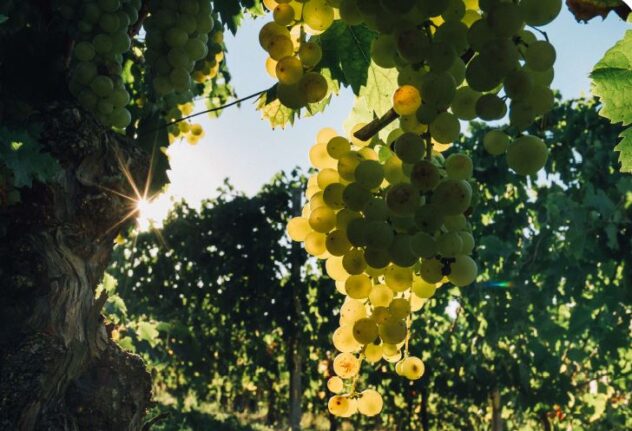
Moscato grapes basking in the sun. Photo: Tosti Group
Many versions
Muscat family varieties have been cultivated since at least ancient times, so a lot has happened throughout history. Muscat varieties grow in vineyards pretty much everywhere in the wine-growing world, though the European ones are considered the most famous. Among the variations, wine lovers may have encountered names like Muscat Bianco, from which the world-famous sweet Moscato d'Asti wines are made in Italy. The same variation is known in France as Muscat Blanc à Petit Grains. The Muscat d'Alexandria variety is also well known, used to make Portugal's sweet Moscatel de Setubal wines, among others.
However, the Muscat variety should not be confused with the similar-sounding Muscadet or Muscadelle varieties, the former grown mainly in France's Loire region and the latter in Bordeaux vineyards.
The Muscat variety is always quite aromatic. It's also versatile: you'll find it as dry and sweet white wine, sparkling wine, and as bubbly. In fortified wines, its aging potential is at its best, otherwise Muscat wines are generally recommended to be drunk within four to five years of harvest.
Organize a Muscat tasting
You can start exploring Muscat wines with any wines you like, which you can browse here. They're made either entirely from the variety, or at least Muscat is part of the blend. When planning your tasting session, arrange the wines so that the tasting order progresses from driest to sweetest. You'll find exact sugar amounts in the wines on Wine of the Week product cards or on Alko's product information pages.
Here you can print an A3-sized Wine of the Week tasting mat with spaces for five wines. Now get tasting!