Spanish-speaking countries of origin produce wines that relatively often display the label designation 'Reserva'. Can we trust that it always means the same thing and guarantees, for example, a certain aging period for the wines? Unfortunately, we cannot. Local regulations vary anyway, but in so-called New World wine countries, Reserva is often a word chosen for the label for commercial reasons to generally communicate quality, or to distinguish the product from a more affordable product line. It may indicate that the wine's flavor has oaky nuances, but not necessarily even that.
In Portugal and Spain, however, the use of the word Reserva is restricted only to wines that meet certain conditions, though minimum aging periods still vary according to regional rules. For example, Portugal's DOC Douro appellation defines that the Reserva designation on the label requires that the red wine has a minimum alcohol content of 12% and the wine has been aged for at least 1 year (regardless of whether the aging took place in barrel and/or bottle).
The most famous Reservas come from Spain's Rioja region. This may well have been the reason why similar designations have been desired on labels elsewhere too. In Rioja, the rules are also the strictest and the aging periods the longest. Let's take a closer look at Rioja below.
Rioja's Strict Rules
The Rioja region has a particularly high quality classification, DOCa, or Denominación de Origen Calificada. Wine quality and production are supervised by the local authority Consejo Regulador. Each vintage must be separately approved by its control board before it can even be sold as Rioja wine. This ensures that the quality of one of the world's most famous wine regions remains at its proper level. The control board is essentially a group of representatives of winegrowers, winemakers, and authorities. They evaluate over 4,000 wine samples each year, which inspectors have collected according to an official process from the tanks where the wines have fermented. First, laboratory analyses are performed on the wines in official laboratories. After this, Board Classification committees still conduct a sensory evaluation, checking the wine's typicity, color, clarity, aroma, taste, and overall quality. Consumers can trust that the Rioja wine they purchase is authentic and has passed inspection, as the bottle bears a seal/mark indicating this.

The quality guarantee of Rioja wines can be verified from the seal on the label. Image
www.riojawine.com
Rioja Wine Aging Periods
The label reads simply Cosecha (meaning 'vintage' or 'harvest year' in English) when it's a so-called generic Rioja. The wine has passed the Control Board's quality inspection, but it doesn't have particularly long aging. These wines are usually in their first or second year, fruity in style. There are also some longer-aged special wines in this category, but their aging method or time doesn't meet the requirements set for Crianza, Reserva, or Gran Reserva.
When the label reads Crianza, the red wine must be at least in its third year, of which it must have aged for at least one year in oak barrels. For white wine, 6 months of barrel aging is sufficient.
Reserva designation on the label indicates that it's a carefully selected red wine that must age for a total of at least 3 years, part of that time in barrel and part in bottle. Of those three years, there must be at least one year of barrel aging and a minimum of 6 months of bottle aging. Once the minimums are met, each producer can decide whether to age their wine more in barrel or in bottles. If you want more fruitiness in the final wine, it's worth aging more time in bottle, whereas if the winemaker prefers abundant flavors from oak, barrel aging should be emphasized. For Reserva white wine, the total aging time is two years, of which at least 6 months must be barrel aging.
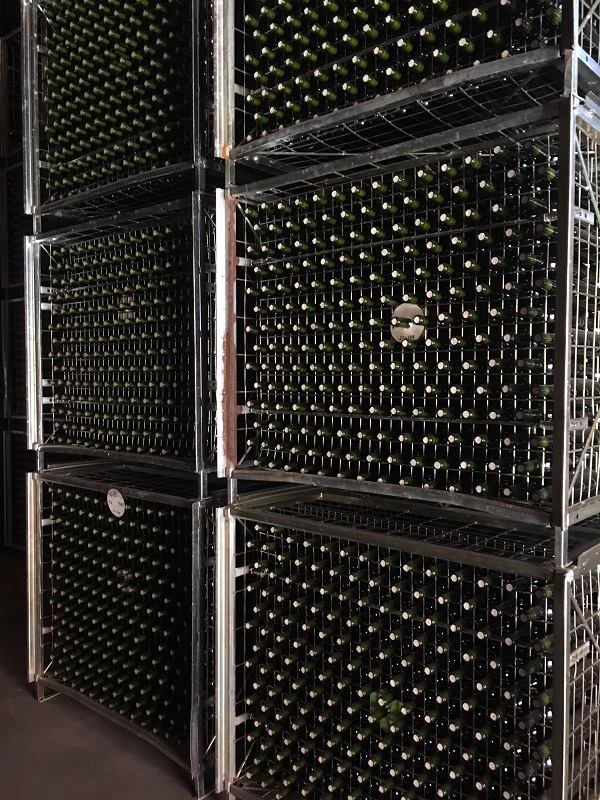
Rioja wines also age in bottles.
Gran Reserva wines are generally not made by producers at all in poor or mediocre vintage years. Long aging can only be withstood by the very best and highest quality wines. The total aging time is a minimum of 5 years. In slightly weaker years, usually only the largest operators may have vineyards where conditions have nevertheless been locally so good that Gran Reserva can still be made. Gran Reserva must have at least 2 years of barrel aging and the bottle aging minimum is also 2 years. Each producer then decides according to their own style within the total time frame whether their wine is longer in barrel or bottle. The total aging minimum for Gran Reserva white wine is 4 years, of which at least 6 months in oak barrels.
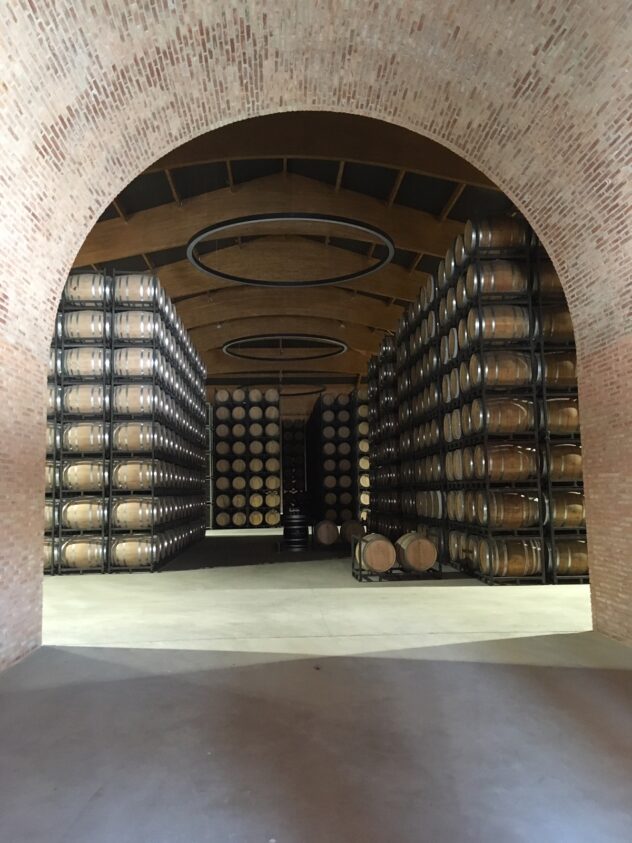
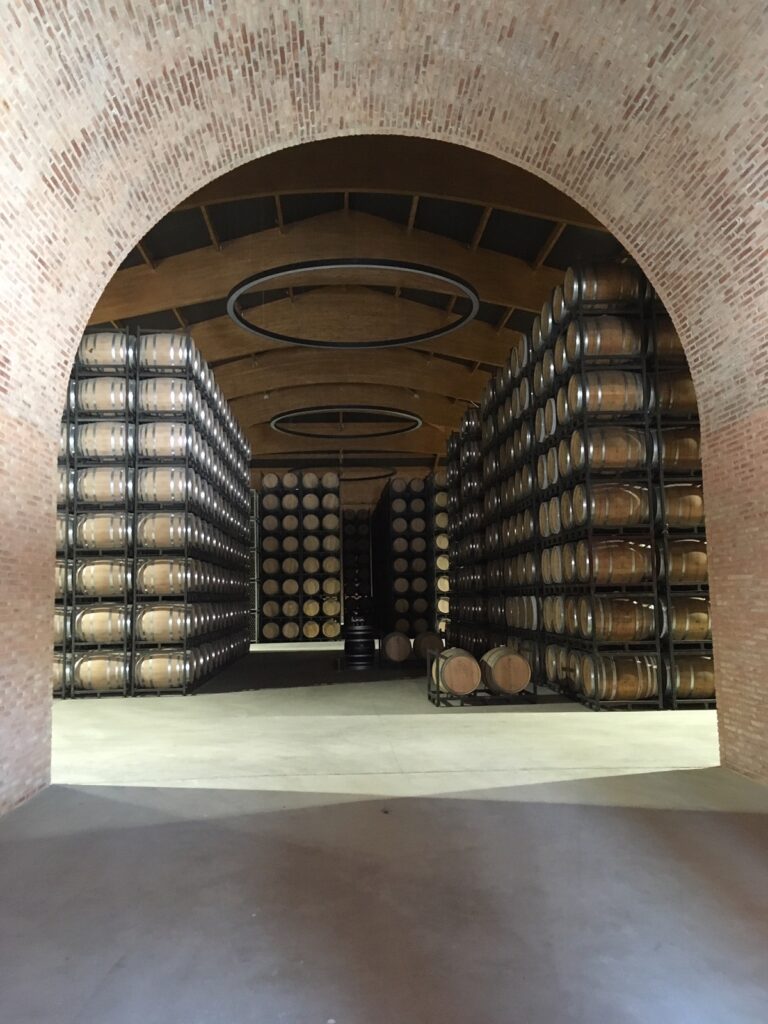
Rioja wines generally age in 225-liter oak barrels. The image shows producer Baron de Ley's impressive barrel aging warehouse. Rioja is also number one among the world's wine regions in the number of barrels—about 1.3 million of them can be found in the region's aging cellars.
Rioja is not without reason one of the wine world's most prestigious red wine regions. Behind the magnificent wines is a lot of regulation related to vineyards and winemaking, which helps keep the quality level high.
Have a nice wine tasting with, for example, the three Riojas below. Of these, one is a generic Cosecha aging class, the second is Reserva-classified, and the third is Gran Reserva. It's fun to compare and evaluate in a group how longer aging affects the taste and structure of the wine. You can find an A3-sized Week's Wine tasting sheet here.