What factors affect the quality of sparkling wine? Quality comes from a few fundamental things. The most important factors for sparkling wine quality are:
1. Base wine quality: There can be no flaws, as they multiply during the process and ruin the final product. Usually the base wine wouldn't be very pleasant on its own—the acidity is significantly high, and the aroma profile isn't very complex. Complex flavors only develop during the aging process. Except for the cheapest sparkling wines, where carbon dioxide is added to the base wine—in those, the characteristics of the original wine come through clearly.
In double fermentation methods, grapes are typically harvested as early as possible for the base wine to maximize acidity. For quality sparkling wines and champagnes, it's customary to create an 'assemblage,' or blend, from the base wines. Using different vintages and 'reserve wines' is part of the blending process. Many non-vintage champagnes use up to 45% reserve wines.
2. Length of aging: The longer the aging, and especially if on the lees (sur lie), the more flavors transfer to the final sparkling wine. Autolysis (the breakdown of yeast cells) is the process through which the wine takes on yeasty flavors. It's said that the significant effects of autolysis only become noticeable after 18 months of aging, and the most significant effects after that are only detectable after another five to ten years of aging.
Aging periods vary greatly. EU legislation generally requires a minimum of 90 days for basic sparkling wines. Local legislation and quality-classified appellations define their own minimum aging times for different types of sparkling wines. It's very common for producers to exceed the minimum times considerably.
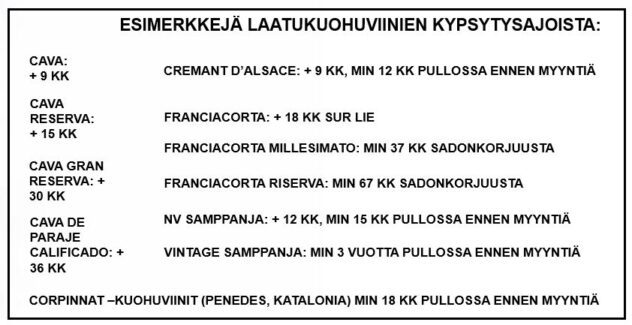
Examples of aging times for different quality sparkling wines.